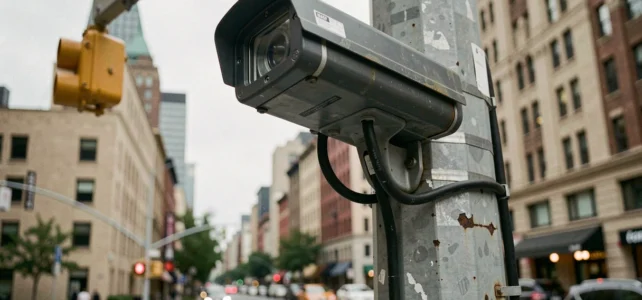
You pass under a traffic light and notice a box mounted high, just above the light. No flash, no warning sign. Should you be worried about your license? The answer entirely depends on the type of equipment installed, and the confusion between traffic management cameras and red light radars remains widespread among drivers.
Electromagnetic loops and ground sensors: the key to distinguishing a radar
The first reflex when spotting a camera on a traffic light is to think of a radar. In reality, the majority of these boxes are not used for enforcement.
Traffic management cameras are video sensors connected to the traffic light control system. Their role: to count vehicles, adjust the duration of green/red phases, and give priority to buses or trams. They have no connection with the vehicle registration file and do not trigger any fine procedures.
A real red light radar works differently. It relies on electromagnetic loops embedded in the roadway, upstream and downstream of the traffic light’s effect line. When a vehicle crosses this line while the light is red, the ground sensors detect the passage and trigger the capture of two successive images. The first shows the vehicle before the line, the second after. This double photo constitutes proof of the infraction of crossing.
In practice, if you see neither loops in the ground (small rectangular cuts in the asphalt) nor a rectangular box mounted on a pole about three meters high and twenty meters from the light, you are probably facing a simple traffic sensor. To better understand the distinction between a camera above a red light and a radar, remember this material criterion: no ground sensor, no automatic enforcement.
Video enforcement at intersections: a procedure distinct from automatic radar
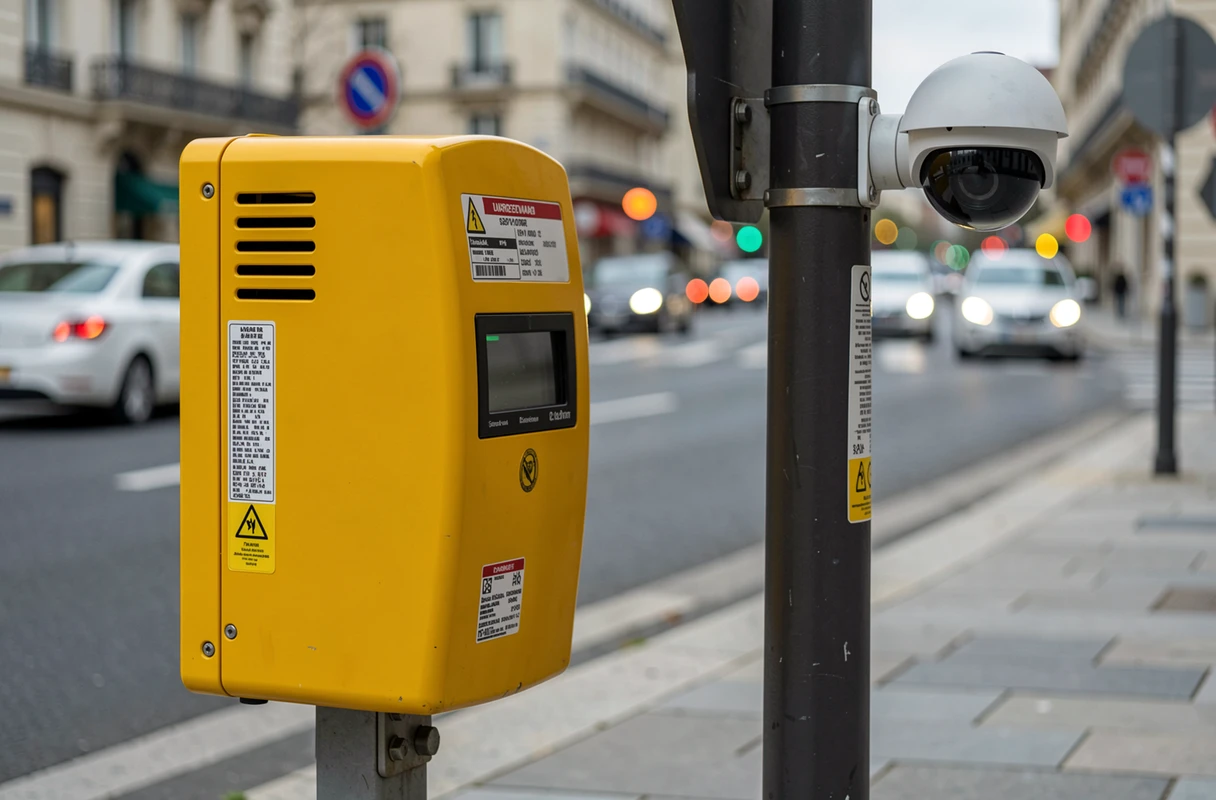
There is a third case that drivers are not well acquainted with. Some urban surveillance cameras, installed by municipalities, can be used to observe violations of the highway code. This is referred to as video enforcement.
The difference with the radar is fundamental. A red light radar operates entirely automatically: ground sensors, double image, sending to the Automated Center for Road Traffic Violations (CACIR), then processing by ANTAI. No agent intervenes at the moment of the infraction.
Video enforcement, on the other hand, requires a sworn agent to view the video feed in real-time or delayed and personally observe the infraction. It is this human intervention that makes the procedure legal. A surveillance camera alone cannot generate an automatic fine.
Municipalities that practice video enforcement must signal the areas concerned with specific signs. The violations observed in this way are the same as those that an agent could note on-site: running a red light, illegal parking, using a phone while driving.
What video enforcement can observe at traffic lights
- Running a red light, provided that an agent visualizes the scene and writes the report
- Failure to respect a bicycle box or a bus lane, often filmed by the same urban cameras
- Stopping on a pedestrian crossing while the light is red, a frequent violation but rarely sanctioned by automatic radar
Sanctions for running a red light: fine and points deduction
Whether the infraction is observed by an automatic radar or by video enforcement, the sanction remains the same. The highway code treats running a red light as a fourth-class offense.
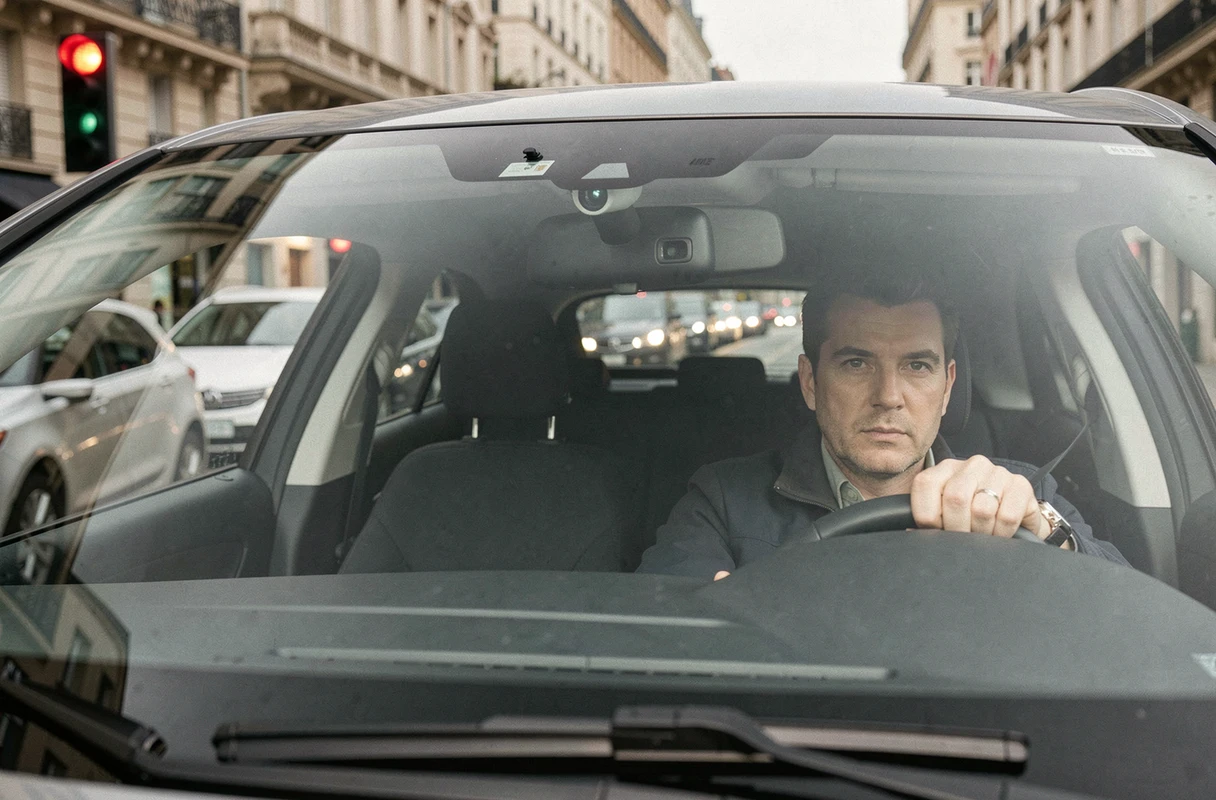
The fixed fine comes with a detection of four points from the driving license. For a standard license with twelve points, this represents one-third of the total. For a young driver in a probationary period, losing four points has more severe consequences, as it can lead to the invalidation of the license.
Challenging a red light fine: what to base the appeal on
Challenging a red light fine relies on specific elements. The valid grounds differ depending on the mode of observation.
- For an automatic radar: check that the two images clearly show the vehicle before and then after the traffic light effect line, that the license plate is readable, and that the light appears red in the photos
- For video enforcement: ensure that the report mentions the identity of the sworn agent and that the area was properly signaled
- In both cases: contest if you were not the driver at the time of the incident (vehicle loan, theft), by identifying the actual driver or providing proof of your absence
The request for exemption is made to the public prosecutor’s officer, within 45 days from the sending of the fine notice. Paying the fine, even partially, counts as acknowledgment of the infraction and makes any contestation impossible.
Tower radars at red lights: the device that combines functions
You may have noticed gray cabins perched on four-meter masts, installed at certain intersections. These tower radars (Mesta Fusion) represent the latest generation of control devices. Their particularity: they can monitor both speed and red light running from the same unit.
A tower radar does not resemble a standard surveillance camera. Its elongated rectangular cabin shape and dedicated mast clearly distinguish it from small traffic management boxes. It is always signaled upstream by a regulatory radar sign.
Confusion persists because these towers are sometimes installed in close proximity to traffic regulation cameras. Two different units, two distinct functions, at the same intersection. The radar warning sign remains the most reliable indicator to know if an enforcement device is active.
Remember the logic: a camera without a radar sign, without a ground sensor, and without a dedicated cabin poses no threat to your wallet or your license. It counts cars, nothing more. The radar, on the other hand, always leaves visible clues, whether it be the loops in the asphalt or the regulatory sign upstream.