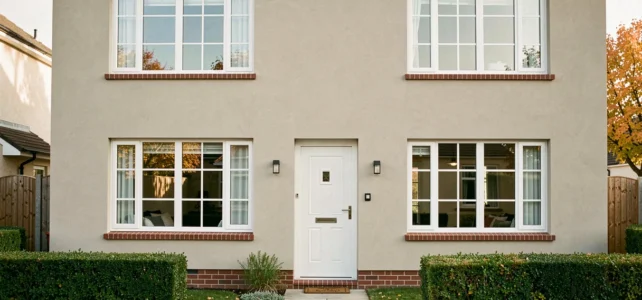
The choice between white joinery and anthracite joinery is not just a matter of color preference. Behind this decision lie local regulatory constraints, thermal comfort issues, and maintenance considerations that are sometimes only discovered after installation. Before even flipping through a RAL color chart, several parameters deserve to be checked.
Local Urban Planning and ABF Zone: The Color of Your Joinery Is Not Always Free
The Local Urban Plan may restrict the colors allowed for exterior joinery. In some municipalities, only a few RAL references are permitted, and anthracite (RAL 7016) is not always included. Consulting the town hall’s urban planning department should be the first reflex before any project.
In protected areas, the constraints are stricter. The Architect of Buildings of France may impose a local color chart based on historically observed shades in the sector’s built environment. Anthracite aluminum is only accepted under conditions of matte finish and architectural coherence with the existing built environment. An ABF refusal can halt a project for several months.
For condominiums, the question takes on another dimension. Changing the color of the joinery alters the building’s exterior appearance, which practically triggers authorization in the general assembly of the condominium, even if the work remains private. Comparing the advantages of white or anthracite joinery only makes sense once this regulatory framework is clarified.
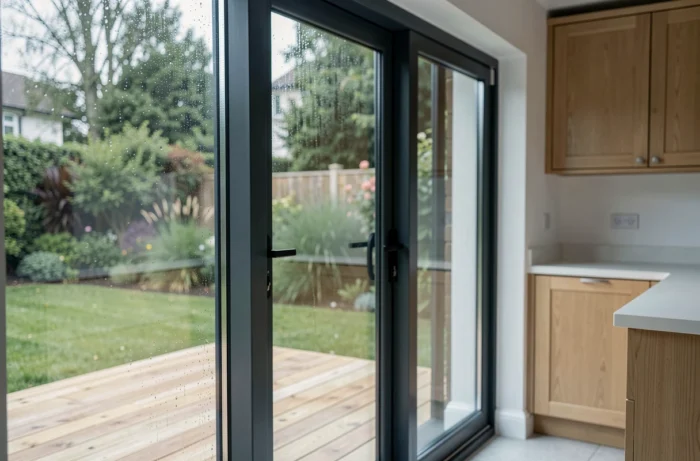
Dark Joinery and Solar Heat: An Often Underestimated Criterion
Dark shades absorb more solar radiation than light shades. On a south-facing bay window, the surface temperature difference between a white profile and an anthracite profile can be significant in summer. This phenomenon affects both PVC and aluminum, although the latter dissipates heat better due to its conductivity.
On highly exposed facades, white remains a safer choice for summer comfort. Field reports vary on this point depending on the regions: in a temperate oceanic climate, overheating remains moderate, while in Mediterranean areas or southwest exposure without solar shading, it becomes a real issue.
Anthracite PVC: The Issue of Expansion
Dark PVC expands more than white PVC due to heat. Manufacturers have developed specific formulations (addition of fiberglass, reflective surface treatment) to limit this phenomenon, but low-quality anthracite PVC remains more sensitive to deformation than standard white PVC. This point should be discussed with the joiner during the quote.
Aluminum, on the other hand, does not pose this color-related expansion problem. This is one of the reasons why dark colors first became widespread in aluminum joinery before entering the PVC market.
RAL 7016 or White 9016: What the Reference Changes on the Facade
The most common anthracite gray in joinery corresponds to RAL 7016. It is a deep gray, slightly bluish, that contrasts sharply with light facades (white plaster, limestone). This contrast creates a marked graphic effect, typical of contemporary houses.
White joinery is not unique either. The RAL references 9003, 9010, and 9016 designate three distinct whites:
- RAL 9016 (signal white) is the most commonly used in standard PVC joinery, a bright white that is slightly cool
- RAL 9010 (pure white) is very slightly warm and matches better with stone or sand-colored facades
- RAL 9003 (safety white) is the coldest and most bluish of the three, often reserved for industry
Two different whites on the same facade give the impression of a construction error. If you are replacing windows in stages, check the exact RAL reference of your existing joinery before ordering.
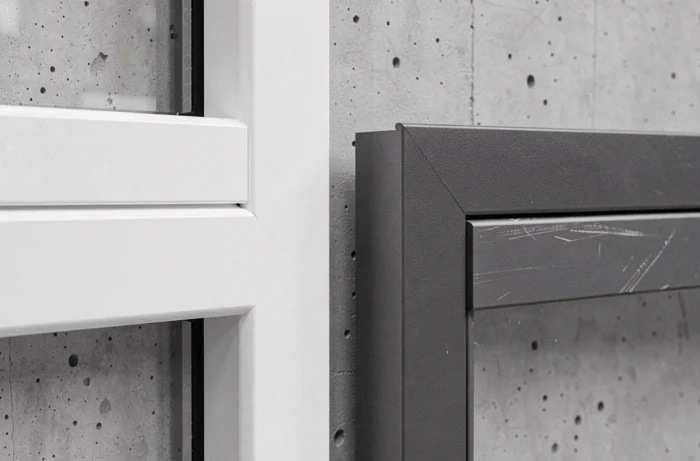
Bi-color Interior-Exterior: The Game-Changing Option
Most PVC and aluminum joinery manufacturers offer bi-color configurations: one shade on the outside, another on the inside. This option allows compliance with the PLU constraints on the facade while maintaining a white interior, which is brighter and easier to integrate into the decor.
The additional cost of a bi-color finish compared to a uniform color varies depending on the material and the manufacturer. In PVC, moving from standard white to an anthracite exterior / white interior finish represents a significant price difference. In aluminum, powder coating allows for more flexibility, and the price difference between two colors is generally smaller than in PVC.
- The bi-color option is suitable for houses facing the street in regulated areas but whose owners want a neutral interior
- It also allows for choosing anthracite on the main facade and white on the rear facade, which is less visible
- The bi-color option avoids having to choose between white and anthracite when both have advantages depending on the room or orientation
Maintenance and Aging According to Color
White will visually get dirty faster (rain marks, urban pollution), but stains are easy to clean. Anthracite better conceals common dirt, but it reveals more lime stains, scratches, and light micro-dust. In the long term, a matte anthracite may tarnish more visibly than a white that gradually yellows.
The choice of material plays as much a role as the color. A powder-coated anthracite aluminum maintains its appearance better than a similarly colored PVC after several years of exposure. The quality of the surface treatment, certified by labels like Qualicoat for aluminum, remains a more reliable indicator than just the manufacturer’s brand.
White or anthracite, the ideal color depends first on what the PLU allows, then on the orientation of the openings and the chosen material. The available data does not allow for designating a universal winner: a south-facing PVC bay does not call for the same response as a north-facing aluminum window. The safest approach is to request a profile sample and test it directly against the facade, in natural light, before confirming the order.