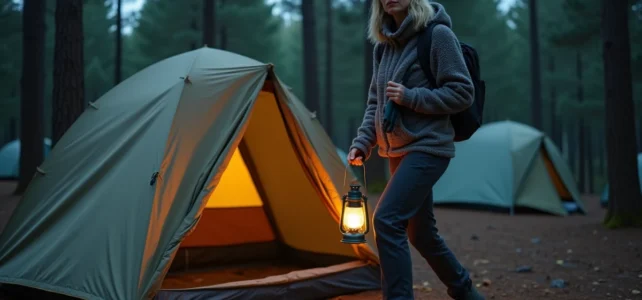
Getting up in the middle of the night to find a restroom at the other end of the campsite, headlamp screwed onto your head, remains one of the most frequently cited inconveniences by regular campers. The issue goes beyond mere comfort: in protected natural areas, managing nighttime needs has become a regulatory challenge.
Several parks and reserves in France have tightened their regulations since 2024, restricting camping in areas where organic waste and toilet paper pollute the soil and water sources. Managing nighttime needs without hassle therefore requires combining practical solutions with a minimum of environmental awareness.
Camping regulations and wild toilets: what has changed
The tightening of rules in protected areas in France is not trivial. The conditions for camping are becoming stricter precisely because of the nuisances associated with “wild toilets”: contamination of waterways, abandoned toilet paper, feces on the surface near trails.
These new constraints effectively impose a strict distance from water sources, the obligation to dig a hole filled in after use, and, in certain reserves, the carrying of a dedicated bag for used toilet paper. Failing to comply with these rules not only exposes you to penalties but also contributes to the gradual closure of previously accessible camping areas.
For those preparing for a self-sufficient stay, finding camping tips on Euro Voyages helps better anticipate these constraints before departure. The underlying trend is clear: campers who do not properly manage their nighttime needs contribute to reducing camping opportunities for everyone.
Portable toilets and disposal bags: the essential nighttime kit
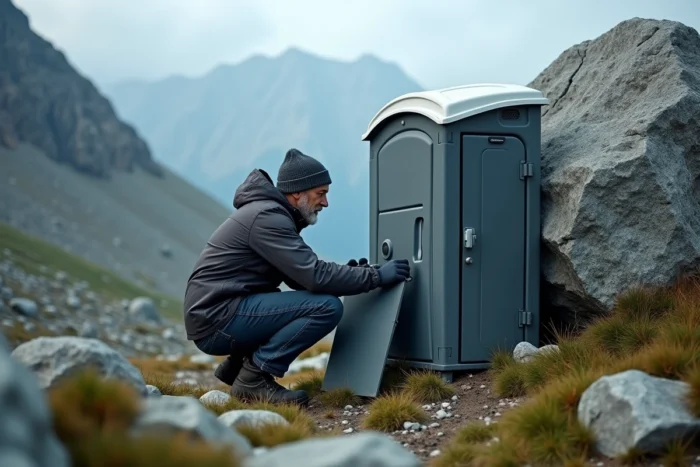
The market for hygiene equipment for self-sufficient camping has evolved in recent years. There is a generalization of the combo mini-portable toilet, disposal bag, and water storage as the standard for nighttime comfort. These solutions are designed for discreet use in or near the tent, or even inside a van.
The criteria that distinguish a good nighttime kit from a useless gadget can be summarized in a few specific points.
- The noise level during use: a chemical toilet with a flush pump makes noise, while a gel-solidifying bag remains silent. In shared tents or close camping, the difference matters.
- Odor management: bags with neutralizing agents allow waste to be stored until the next day without nuisance. A simple plastic bag is not sufficient.
- Ease of emptying: some portable models have a detachable tank that can be emptied at designated collection points in camper areas or equipped campsites.
- Bulk and weight: for the hiker, a pack of solidifying bags weighs just a few dozen grams. A portable chemical toilet is more suitable for a van or car camping.
The choice depends on the camping mode. In lightweight camping, bags remain the most suitable solution. In a van or camper, a compact portable toilet avoids nighttime outings and trips back and forth to the restroom.
Reducing nighttime trips: practical strategies in the tent
Before discussing equipment, a few simple habits can limit the number of wake-ups. Reducing liquid intake in the hour before bedtime makes a real difference, especially for diuretic drinks like evening tea or coffee.
Organizing space in the tent
Placing a urinal or a dedicated container in the tent’s vestibule (the space between the rainfly and the inner tent) allows for managing a need without going outside. For this to work without accidents, the container must have a wide neck and a tight-fitting lid. Models sold in pharmacies for medical use serve this function better than makeshift containers.
Lighting is just as important as the container. A small dimmable lamp, placed within reach, avoids waking everyone up with a full-power headlamp. Some campers attach a magnetic LED lamp to the metal frame of the tent, freeing their hands.
Tent positioning relative to restrooms
When the campsite has restroom facilities, setting up your tent reasonably close to the toilets remains the simplest precaution. Spots near restrooms are often overlooked by campers who fear noise or odors, but most modern facilities are well-ventilated enough that the nuisance is minimal. The compromise is worth it for families with children or individuals prone to frequent awakenings.
Hygiene and environmental impact: actions that make a difference
Managing nighttime needs while camping is not just about finding the right container. The hygiene aspect is often underestimated, especially in wild camping without access to running water.
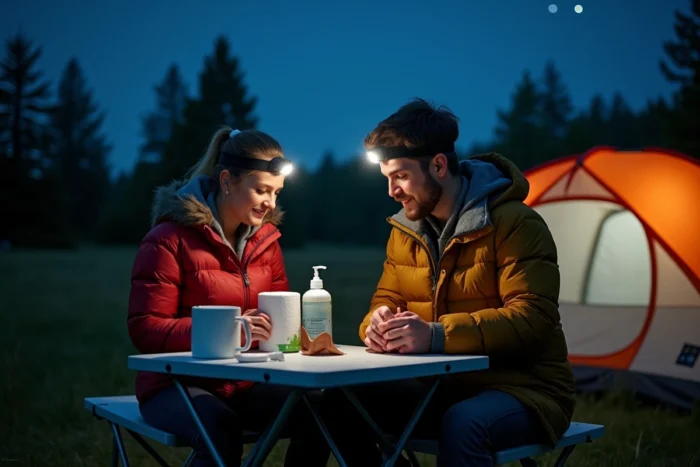
- Small-sized hand sanitizer remains the minimum after each use. A pocket-sized bottle slipped into the tent pocket avoids searching in the dark.
- Biodegradable toilet paper decomposes faster, but it does not exempt you from storing it in a waterproof bag if local regulations require it.
- For solid waste in the wild, the rule of the hole (a minimum depth of about twenty centimeters, away from waterways and trails) remains the norm. Carefully filling in after use is not optional.
Field reports vary on the actual effectiveness of treatment tablets for portable toilets. Some neutralize odors well for several hours, while others lose their effect quickly depending on the ambient temperature. Testing before the trip, at home, avoids unpleasant surprises on-site.
A camper who leaves no trace protects access to sites for others. Increasing restrictions in protected areas show that managers’ tolerance is decreasing in the face of careless behavior. Every poorly managed nighttime outing, every abandoned piece of paper, feeds the case for those who want to outright ban free camping. Managing nighttime needs, as trivial as it may seem, is an integral part of responsible camping.