
Improving one’s well-being on a daily basis does not necessarily require major upheavals. Recent data in clinical psychology point to very short actions, repeated over specific time frames, as measurable levers of serenity. This article brings together ten concrete tips, each backed by an identified mechanism on the body or mind.
1. Lengthen the exhalation for one minute to calm the nervous system

Dr. Jérôme Palazzolo recommends a micro-habit of breathing that directly targets the parasympathetic nervous system: lengthening the exhalation for one minute. The principle is to exhale for a longer time than the inhalation, for example, four seconds of inhalation for six to eight seconds of exhalation.
This action requires no equipment and no specific location. It can be practiced while commuting, at your desk, or before a meeting. Lengthening the exhalation activates the vagus nerve and reduces heart rate almost immediately.
For those who wish to discover well-being tips on Kalinoe, this technique is among the most documented basic gestures by French clinicians since 2023.
2. Take a micro-break every 60 to 90 minutes away from screens

Working without interruption for several hours degrades the quality of attention and increases stress. Dr. Palazzolo recommends a real micro-break every 60 to 90 minutes, away from any screen. Not a quick check of the phone, but a real disconnection: get up, look out the window, walk a few steps.
Most articles on well-being mention breaks vaguely. The 60 to 90-minute window corresponds to the brain’s natural attention cycle, described in chronobiology as the ultradian rhythm.
3. Delay checking your phone for 10 to 15 minutes after waking up

Checking your phone immediately upon waking exposes the brain to a flood of unfiltered information (notifications, news, messages) before the prefrontal cortex is fully active. Dr. Palazzolo’s recommendation is clear: wait 10 to 15 minutes after waking up before touching your phone.
This delay allows you to set an intention for the day and become aware of your physical and emotional state. The cumulative effect over several weeks results in a reduction of the morning urgency feeling and a better quality of mind from the very first hours.
4. Ask yourself, “What do I really need right now?”

This micro-practice of emotional regulation involves interrupting the automatic response by asking a single question: “What do I really need right now?” The answer could be to drink a glass of water, go outside for fresh air, call someone, or simply sit in silence.
The benefit of this approach is that it adjusts well-being actions to the actual state of the moment, rather than applying the same routine every day without considering internal fluctuations. Psychologists who promote this practice emphasize its simplicity: no journal, no app, just a question.
5. Organize your living space to reduce mental overload

Paris 8 University includes space organization among the fundamental habits of mental health. Visual clutter generates a form of constant cognitive noise: the brain processes peripheral objects as unresolved tasks.
Sorting belongings, letting go of the unnecessary, and highlighting a positive object (photo, souvenir) changes the perception of space. It is not about aesthetics, but cognitive load. A simplified environment reduces the number of daily micro-decisions and frees up mental energy for what matters.
6. Engage in short physical activity rather than intense workouts

Recommendations converge on a specific point: regularity trumps intensity. A few minutes of brisk walking, stretching, or simple movements each day produce measurable effects on mood and sleep.
The classic trap is aiming for long sessions and then giving up due to lack of time. It is better to engage in short daily movements than in intense and sporadic sessions. The body releases endorphins even during moderate efforts, as long as they are repeated.
7. Establish a stable sleep routine
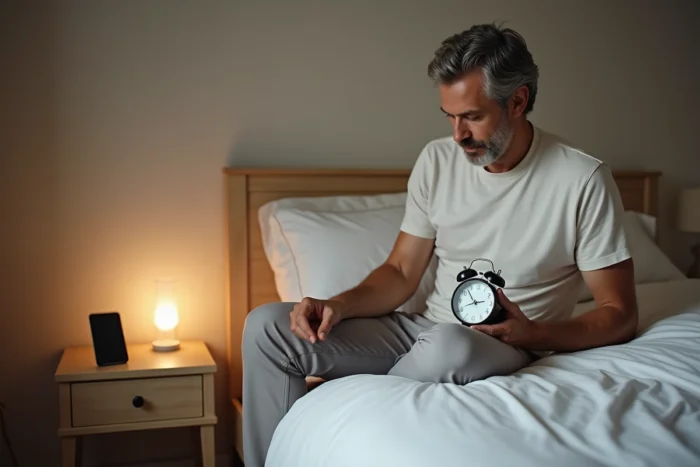
Sleep remains the foundation of physical and mental well-being. Maintaining regular bedtimes and wake-up times, even on weekends, synchronizes the biological clock and improves the quality of rest.
- Reduce screen exposure at least thirty minutes before bedtime to limit melatonin suppression
- Keep the bedroom cool and dark, two factors that facilitate falling asleep
- Avoid caffeine in the latter part of the day, as its half-life in the body often exceeds five hours
Regular sleep directly influences stress management, memory, and concentration capacity the following day.
8. Cultivate an authentic social connection rather than a digital one

In-person exchanges activate neural circuits different from those engaged by social networks. A phone call, a shared coffee, or a simple chat with a neighbor produce a protective effect on mental health that digital interactions do not replicate.
Paris 8 University emphasizes building a strong social circle as a factor of resilience. This does not imply a large number of contacts, but rather the quality and regularity of exchanges.
9. Keep a targeted gratitude journal

Writing down one to three concrete things each evening for which you feel grateful gradually alters the brain’s attentional bias. The key point is precision: writing “the morning light on the balcony” has a more pronounced effect than a vague “my family.”
This practice works because it forces the brain to scan the day for positive elements, counterbalancing the natural negativity bias. A few minutes are enough, as long as you remain specific.
10. Plan your days with intention lists rather than task lists

The distinction between a task list and an intention list changes the mental dynamic of the day. A task list measures what remains to be done (a source of pressure). An intention list defines how you want to feel and act (a source of direction).
- “To do”: the priority concrete actions, limited to three or four to avoid overload
- “To be”: the desired state of mind (patient, focused, available)
- “Not to do”: the behaviors to avoid that day (checking social media before noon, skipping lunch)
This triple framing, promoted by several practitioners in clinical psychology, aligns daily actions with personal values rather than mere productivity.
Each of these ten tips takes just a few minutes each day. Their effectiveness relies less on their complexity and more on their repetition. The common thread remains the same: short, precise, and regular actions produce cumulative effects on stress, sleep, energy, and overall quality of life.