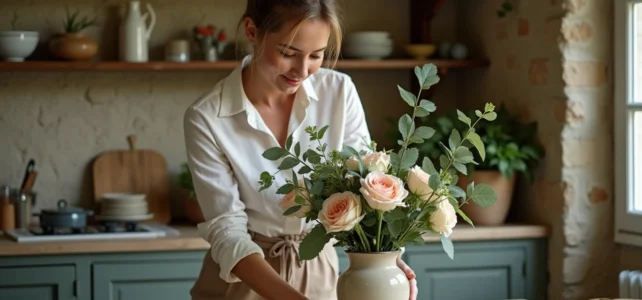
The French art of living is not decreed by the accumulation of decorative objects stamped with “Parisian chic.” It relies on precise choices of materials, proportions, and domestic rituals that structure a coherent interior. Here, we detail the technical levers that are least addressed by mainstream guides.
Proportions and circulation: the invisible foundation of French style
A French interior is first read in the relationship between the volumes of furniture and the ceiling height. Proportion always takes precedence over the quantity of furniture. Placing a massive sofa in a room with low ceilings crushes the space, even if each element is “of quality.”
We recommend mapping out the circulation before any purchase. The main passage between two living areas (living room, dining room) should remain clear by at least the width of an outstretched arm. This simple rule, inherited from the layout of Haussmannian apartments, ensures a fluidity that is instinctively associated with refinement.
Partial symmetry serves as another reference point. Two identical armchairs facing a fireplace, a mirror centered above a console: these symmetrical arrangements do not need to be rigid. A slight asymmetry (a vase on one side, an off-center light fixture) breaks the rigidity without losing clarity. Among the online shops that select pieces suited to this logic of proportions, my-french-touch.fr offers a catalog designed around French craftsmanship and this demand for balance.

Noble materials and patina: choosing textiles and wood according to use
Linen, cotton velvet, and boucle wool form the textile trio of French style. Each serves a specific purpose, and confusing them results in an incoherent interior.
- Washed linen is suitable for high-traffic living areas: it wrinkles without degrading, absorbs light, and becomes more supple over time. Opt for a sufficiently dense weight for curtains and cushion covers.
- Cotton velvet is used on main seating (sofa, accent chair). Its texture absorbs sound and creates a feeling of enveloping comfort. However, it retains dust and requires regular maintenance with a soft brush.
- Boucle wool works as an accent: a throw, a pouf, a small rug. It adds tactile relief without visually weighing down the room.
When it comes to wood, French style favors light or medium species (oak, walnut) with a waxed or oiled finish rather than varnished. The natural patina of solid wood is a marker of authenticity that laminate cannot replicate. An antique piece, even if imperfect, anchors an interior more than a perfectly calibrated new reproduction.
Everyday table art: going beyond ceremonial setting
Most guides focus on setting the table for entertaining. The French art of living, however, plays out in ordinary meals. We observe that choosing everyday tableware in earthenware or stoneware, rather than fine porcelain reserved for special occasions, transforms the relationship to the meal.
A mismatched service, provided it adheres to a palette of two or three close colors, creates a more vibrant effect than a uniform service. Mixing eras on the same table is a typically French gesture: contemporary plates with cutlery featuring horn or olive wood handles, a vintage carafe placed on a raw linen tablecloth.
The detail that distinguishes a common setting from a refined one often lies in the table linen. A fabric napkin (even simple, even without embroidery) replaces paper. This minimal gesture alters the perception of the meal and slows the pace, directly aligning with the trend of domestic slow living that has been developing in French households for several years.
French decoration and sobriety: balancing accumulation and emptiness
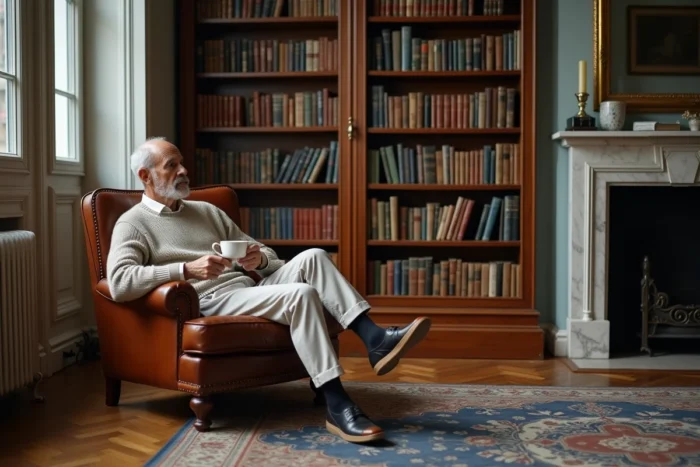
French style is not maximalist. It relies on a controlled density of objects in each visual zone. Three objects per horizontal surface constitute an effective maximum: beyond that, the eye no longer prioritizes, and the whole loses clarity.
On a fireplace, for example: a mirror or a painting, a tall object (candle holder, narrow vase), and a low element (box, small bronze, stack of books). Nothing more. This principle applies to consoles, open shelves, and coffee tables.
Gradual decluttering, which is gaining ground in the French approach to domestic well-being, fits within this logic. It is not about emptying rooms in a Scandinavian minimalist manner, but rather removing what does not contribute to the visual composition. An object without a story or clear decorative function clutters, regardless of its quality.
The role of interior fragrance
The French art of living incorporates an olfactory dimension often overlooked in decor guides. A subtle ambient fragrance (plant-based candle, textile mist) contributes to the identity of an interior just as much as colors or materials. We recommend limiting to a single fragrance per room to avoid saturation.
The most coherent approach is to choose a fragrance linked to the present materials: woody notes for a living room dominated by oak, herbal or dry floral notes for a room dressed in linen. This correspondence between the visual and the olfactory creates a sensory coherence that visitors perceive without necessarily identifying.
Ultimately, the French art of living at home hinges on this attention to the correspondences between the senses, materials, and the actual uses of each room. An interior where each choice responds to a logic of use rather than a fleeting trend ages better, is easier to tidy, and provides lasting comfort.