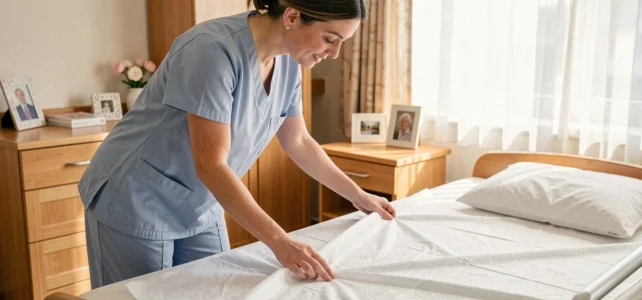
The sécuridrap is a textile medical device that attaches to a medical bed to keep a disoriented patient or one with low muscle tone in a secure position. Classified among adapted restraint devices, it differs from rigid straps and barriers by its fabric design, which envelops the resident without abruptly blocking their movements. Its use mainly concerns nursing homes, geriatric services, and certain specialized hospital units.
Restraint in Nursing Homes: What the Recent Legal Framework Changes
Mechanical restraint in healthcare facilities in France follows a logic of last resort. A decision from the Council of State dated August 4, 2026, confirmed this principle by reminding that any restraint device must be subject to an individualized medical prescription, regularly reassessed.
This legal tightening pushes facilities to document each use of restraint and justify the absence of less restrictive alternatives. In this context, an adapted restraint textile reduces the level of coercion compared to a chest strap or a traditional harness, while meeting the obligation to prevent nighttime falls.
The decree published in the Official Journal on August 9, 2026, also requires nursing homes to report three publicly disclosed indicators to the CNSA each year: staffing rate, absenteeism rate, and staff turnover rate. These data, cross-referenced with restraint practices, will ultimately allow for comparisons between facilities that invest in less coercive textile devices and those that maintain rigid mechanical restraints.
A detailed article on the use of the sécuridrap in nursing homes describes how this device fits into the logic of gradually reducing hard restraint.

Sécuridrap Selfia: Technical Operation of the Textile Device
The sécuridrap, in its Selfia version manufactured by Mulliez-Flory, relies on three anchor points fixed to the frame of the medical bed. This multipoint fixation system distributes tension across the entire sheet, preventing localized compression points on the resident’s body.
The closure integrates a secure locking mechanism that prevents accidental opening by the patient while remaining accessible to the caregiving staff. The caregiver can quickly open the device for care, hygiene, or emergency intervention, and then close it without repositioning the entire setup.
Textile Characteristics and Maintenance
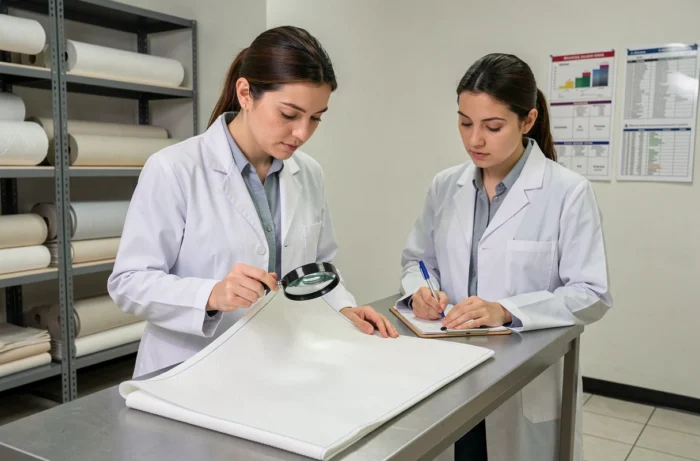
The fabric is designed to withstand industrial washing cycles in hospital laundries at high temperatures. This resistance to repeated washes distinguishes the sécuridrap from a standard bed sheet, whose fiber degrades after just a few dozen cycles in a communal setting.
- Fabric compatible with thermal disinfection protocols used in nursing homes and hospital environments
- Enveloping design that preserves the freedom of movement of the upper and lower limbs in bed
- Closure system operable by a single caregiver, without tools or specific keys
- Adaptability to different sizes of medical beds thanks to adjustable anchor points
This combination of textile strength and ease of installation reduces handling time for caregiving teams, a crucial factor in facilities where the caregiver-resident ratio is often strained.
Prevention of Nighttime Falls: Why Textile Changes the Game
Bed falls represent one of the most common accidents in geriatrics. Rigid bed barriers, long considered the standard response, pose a paradox: they create an additional risk of injury when the resident attempts to climb over them.
The sécuridrap eliminates this risk of climbing over since the resident remains enveloped in the fabric. The textile restraint acts through gentle support, not by physical obstruction. The patient can move, change position, bend their knees, without encountering a hard surface to bump against.
This approach has a direct effect on sleep quality. A resident who can turn freely in a soft textile space sleeps better than a patient restricted by a tight harness. Nighttime calm, in turn, reduces agitation, which decreases the need for sedative medication interventions.
Comparison with Other Bed Restraint Devices
| Device | Freedom of Movement | Risk of Injury from Contact | Ease of Installation |
|---|---|---|---|
| Rigid Bed Barriers | Limited (movements in a confined space) | High (bumps against the bars, attempts to climb over) | Quick but requires regular checks |
| Chest Strap | Very limited (torso immobilized) | Medium (compression, friction) | Simple but frequent repositioning |
| Sécuridrap Textile | Preserved (movements within the textile envelope) | Low (no rigid surface) | One caregiver is sufficient, integrated locking |
Public Indicators and Soft Restraint Strategy in Nursing Homes
The three indicators mandated by the August 2026 decree will make the actual operating conditions of nursing homes visible. A facility that shows a low staffing rate but a high reliance on traditional mechanical restraint will now be identifiable.
Integrating the sécuridrap into a comprehensive strategy for reducing restraint allows facilities to document an active approach. The textile device becomes a piece of evidence in the care record: medical prescription, periodic reassessment, traceability of the use of the device.
This traceability also meets a growing demand from families. Relatives of a resident are more likely to accept a soft restraint sheet than a harness or wrist strap. The visual aspect of the textile helps reduce the perceived sense of mistreatment, a sensitive issue in the dialogue between families and facilities.
- Mandatory medical prescription with documented reassessment
- Integration into the resident’s individualized care plan
- Compatibility with future audits related to the public indicators of the CNSA
The choice of a textile restraint device does not eliminate restraint. It repositions it on a less coercive scale, within a regulatory framework that now requires concrete evidence of this gradation. For nursing homes anticipating public comparisons between facilities, the sécuridrap serves as a lever that is both medical, legal, and organizational.