In France, the framework for assistance aimed at elderly people has been profoundly restructured in recent years. The public architecture now relies on two main pillars for home care: the APA (personalized autonomy allowance) for daily human assistance, and MaPrimeAdapt’ for housing adaptation work. This simplification changes the game for families, but it does not solve everything. Between financing adaptations, choosing equipment, and ensuring continuity of support, several angles deserve close examination.
Exemption threshold for employer contributions: a discreet change that impacts the budget
When employing a home caregiver, the cost is not limited to the net salary. Employer contributions represent a significant portion of the monthly bill. A lever long used by families was the automatic exemption from these contributions for elderly employers.
The age threshold for this exemption has been raised. In practice, individuals who previously benefited from it now find themselves paying more in charges, without the amount of the APA being adjusted accordingly. The additional cost can make hiring a home caregiver less accessible, particularly for households whose incomes are just above the maximum coverage thresholds.
Families looking to organize sustainable home care would benefit from researching the updated provisions via aide-seniors.fr, where eligibility conditions and procedures are detailed according to each situation.
MaPrimeAdapt’ and housing adaptation: what the single window really changes
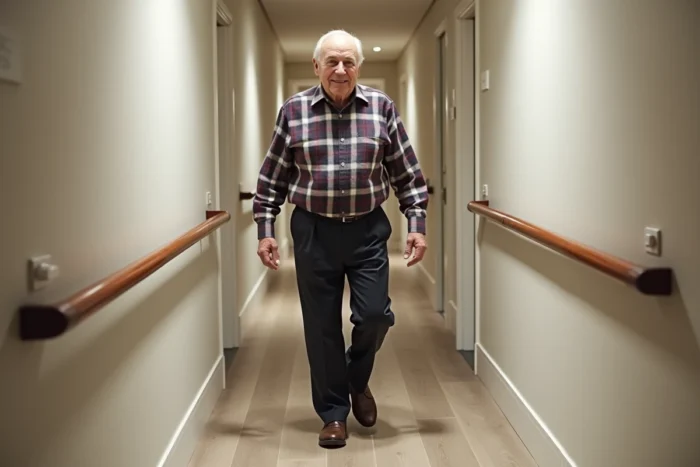
Since the implementation of MaPrimeAdapt’, managed by Anah and France Rénov’, home adaptation work (ground-level showers, stairlifts, access ramps) goes through a single window. The previous tax credit dedicated to adaptation work has been eliminated.
On paper, the process is clearer. One file, one contact person. In practice, feedback from the field varies on this point. The processing time varies by department, and some urgent work (such as replacing a bathtub after a fall) struggles with administrative delays.
Eligible work and anticipated trade-offs
The scope of MaPrimeAdapt’ covers adaptations related to loss of autonomy and housing safety. However, not all items are covered at the same rate, and the remaining cost depends on the household’s income.
- The bathroom accounts for the majority of requests: bathtub replacement, installation of grab bars, non-slip flooring. It is often the first adaptation recommended after a GIR assessment.
- Stairlifts and elevators represent a heavier budget, with quotes varying significantly depending on the staircase configuration and the chosen provider.
- Automatic lighting, motorized roller shutters, and night light paths are sometimes overlooked, even though they significantly reduce the risk of falls.
Before starting a project, having a home assessment conducted by an occupational therapist allows prioritizing work based on actual risk rather than habit or available budget.
Continuity of home support during the summer period
The issue of continuity of home care services during the summer is a rarely addressed angle, but it directly affects the safety of isolated elderly people. During holiday periods, home care structures struggle to maintain their staff levels. Replacements are not always guaranteed, and service disruptions expose the most vulnerable seniors to concrete risks: dehydration, undetected falls, interruption of meal delivery.
Some departments are experimenting with mobile services to break the isolation in rural areas. In the Landes, a bus dedicated to seniors has met with unexpected success, becoming a model observed by other communities. This type of initiative partially compensates for the lack of fixed services, but it remains dependent on local funding and the availability of volunteers.
Anticipate rather than endure
For families, checking the summer coverage of the home care provider is one of the questions to ask as soon as the contract is signed. A few points to clarify:
- Does the provider guarantee systematic replacement in case of the usual caregiver’s absence?
- Is there a monitoring protocol for heatwave episodes (daily calls, physical visits)?
- Is teleassistance maintained without interruption, including on weekends and public holidays?
The APA can fund part of these services, but the request must be made in advance during the assessment of the care plan. Waiting until summer to signal a need for reinforcement significantly extends the timelines.

Senior residences and alternatives to nursing homes: a market under pressure
The stock of senior residences in France is not keeping pace with demand. Demographic projections indicate a sustained increase in the number of people experiencing loss of autonomy in the coming years, particularly in certain regions like Pays de la Loire.
Senior residences (non-medicalized) attract an audience that wishes to maintain their autonomy while benefiting from a secure environment and social life. However, the monthly cost remains a barrier for many. The price gap between departments is notable: some public nursing homes have rates significantly lower than the national average, but places there are scarce.
Alternative models are emerging. In Bérat, near Toulouse, a handful of seniors have chosen to live together in shared housing for several years. This type of senior co-housing remains marginal but meets a dual need: reducing costs and breaking isolation.
The choice between adapted home care, senior residence, and nursing home depends on very individual criteria: level of dependence, budget, family proximity, local offerings. The available data do not allow for designating a universally superior model. What stands out is that anticipation remains the determining factor for accessing the most suitable solution, regardless of the type of housing sought.