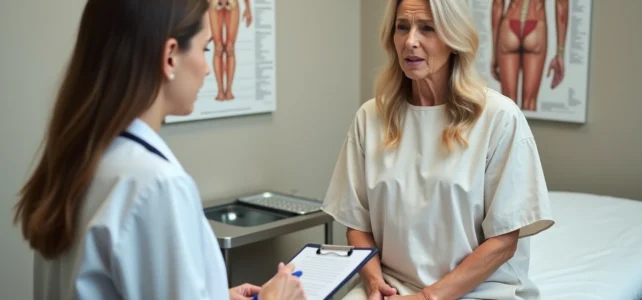
Buttock shingles corresponds to a reactivation of the varicella-zoster virus in the sacral nerve ganglia, which innervate the buttock and perineum region. This location, less common than thoracic shingles, poses recognition difficulties because the rash can be mistaken for genital herpes or contact dermatitis.
Sacral dermatome: why shingles affects the buttock
The chickenpox virus never disappears after the primary infection. It remains dormant in the sensory nerve ganglia, sometimes for decades. When it reactivates, it follows the path of a single nerve, known as a dermatome.
On the buttock, the affected dermatomes are the sacral roots S2 to S4. The rash therefore remains strictly unilateral: it does not cross the midline of the intergluteal fold. This anatomical detail is the first criterion that distinguishes a shingles on the buttock from other symmetrical skin conditions like eczema or fungal infections.
The fact that the rash follows a nerve pathway also explains the characteristic pain: it can radiate to the thigh, perineum, or hip on the same side, even before the appearance of vesicles.

Symptoms of buttock shingles: the often overlooked prodromal phase
The majority of patients consult at the stage of vesicles. The phase preceding the rash, called prodrome, often goes unnoticed or leads to a misdiagnosis.
Signs before the skin rash
For two to four days before any visible lesions, the affected buttock area presents unusual sensations:
- Burning or localized tingling on one buttock, sometimes described as a sunburn sensation without redness
- Stabbing or pulsating pain along the nerve pathway, which may resemble sciatica if it radiates down to the thigh
- Increased sensitivity to touch, to the point that the friction of clothing becomes uncomfortable
These signs precede the appearance of small red patches that quickly become covered with clustered vesicles. The fluid they contain is clear at first, then becomes cloudy within a few days before forming crusts.
Differentiating shingles from genital herpes
The buttock location often creates confusion with type 2 herpes simplex. Two criteria allow for a quick distinction. Shingles remains unilateral and follows an elongated band on the buttock, while genital herpes produces more dispersed lesions, often bilateral or centered on mucous membranes.
Pain is the second clue. The pain of shingles precedes the rash by several days, which is rare in herpes simplex where lesions and discomfort appear simultaneously.
Antiviral treatment for shingles: the time factor
Treatment relies on oral antivirals, mainly valaciclovir or acyclovir. Their effectiveness depends on the speed of management: treatment started within 72 hours of the rash reduces the duration of symptoms and limits the risk of residual pain.
After this period, antivirals remain beneficial for immunocompromised or elderly individuals, but their benefit decreases. This is why the early recognition of the prodromal symptoms described above is so important.
Relieving local pain
Classic analgesics (paracetamol, anti-inflammatories) constitute the first level of treatment. The buttock location adds a practical constraint: the pressure from sitting and the friction of underwear exacerbate discomfort.
- Opt for loose cotton clothing to limit mechanical irritation of the vesicles
- Apply cool (not cold) compresses to the area to soothe the burning sensation
- Avoid any occlusive dressings or greasy creams that retain moisture and delay healing
The doctor may prescribe stronger analgesics if the pain resists first-line treatments, especially in patients over 50 years old.
Postherpetic neuralgia on the buttock: the complication to watch for
The healing of skin lesions generally takes two to four weeks. The crusts fall off and the skin returns to a normal appearance, sometimes with slight temporary depigmentation.
The problem arises when pain persists after the complete disappearance of the rash. This postherpetic neuralgia affects a significant proportion of patients, especially after 60 years old. It manifests as burning, stabbing, or skin hypersensitivity in the area where the vesicles were located.
On the buttock, this chronic pain affects prolonged sitting and disrupts sleep. Medical follow-up is necessary if the pain persists beyond several weeks after healing. Specific treatments include certain anticonvulsants or antidepressants for pain relief, prescribed at appropriate doses.
Shingles vaccine and immune status: reducing the risk of recurrence
The Shingrix vaccine is included in the French vaccination schedule with a recommendation for individuals aged 65 and older. This recombinant vaccine does not contain live virus, making it usable in immunocompromised patients, specifically those at the highest risk of reactivation.
An immunosuppressive treatment or HIV infection increases the likelihood of shingles, including in atypical locations like the buttock. For these patients, discussing vaccination with the treating physician should be initiated without waiting for a first episode.
Buttock shingles remains a condition that most doctors diagnose quickly once the rash is visible. The difficulty lies in the prodromal phase, where unilateral pain without skin lesions can mimic other conditions. Consulting at the first sign of localized burning on one buttock, even without vesicles, allows for the crucial hours needed for the effectiveness of antiviral treatment.