
Inflation is slowing down in France, but households continue to adjust their consumption habits. According to Insee, the consumer price index rose by 2.1% year-on-year in July 2026, with considerable variations across categories. Food prices increased by only about 1%, while energy prices surged by 12.6%. Therefore, saving on a daily basis without sacrificing means targeting the right areas of expenditure, not just cutting back on groceries.
Price Increase Distribution: Where Does the Budget Really Go?
Most savings guides focus their advice on food and everyday purchases. Recent data from Insee tells a different story.
| Expenditure Category | Price Change (July 2026, year-on-year) |
|---|---|
| Energy (electricity, gas, fuel) | +12.6% |
| Services (insurance, telecoms, health) | +2.2% |
| Food | approximately +1% |
The energy category therefore accounts for six times more than food in terms of relative increase. Reducing grocery bills by a few euros per week does not compensate for an increase of several dozen euros in heating or fuel costs.
Services, often overlooked in lists of tips, represent the second lever. Home insurance, health insurance, phone subscriptions: these contracts renew automatically, and their prices quietly rise each year. Comparing them once a year, at the contract anniversary date, has a measurable effect on the annual budget.
To track these adjustments and structure a savings plan tailored to one’s situation, specialized resources exist, such as https://www.econozen.fr/, which brings together tools and advice focused on budget management.
Energy Bills: Levers That Really Reduce Expenses
Lowering the heating by one degree is a well-known tip. It remains relevant, but it is no longer sufficient in the face of a 12.6% increase in energy prices. Three actions have a greater impact than mere behavioral sobriety.
- Compare electricity and gas suppliers at least once a year. Since the market opened, price differences between offers can reach several hundred euros annually depending on consumption profile. The national energy mediator’s comparator remains the reference tool.
- Check the pricing option of your meter (standard or off-peak hours). A household that runs the washing machine and dishwasher during the day sometimes pays more during off-peak hours than at the standard rate, contrary to what the option is supposed to offer.
- Insulate priority thermal loss points (windows, attics, door bottoms). Public aid covers part of the work, but even a simple door draft stopper or an insulating film on windows can noticeably reduce heating bills.
Fuel represents another major component of the energy category. Combining trips, checking tire pressure, and comparing prices at nearby stations are simple gestures. However, carpooling for work remains the most effective lever to divide this expense, provided a compatible route can be found.
Subscriptions and Recurring Contracts: The Invisible Budget
A household typically accumulates numerous monthly withdrawals: video streaming, music, gym, internet box, insurance, health insurance, applications. Taken individually, each amount seems modest. Added together, they form a category of expenditure that is often underestimated.
Audit of Bank Withdrawals
Reviewing bank statements over three months allows for the identification of forgotten or underused subscriptions. A subscription unused for two months deserves to be canceled, with the option to resume it later. The law now allows most contracts to be canceled online, in just a few clicks, after the first year.
Renegotiate Rather Than Accept Renewal
Car, home, and health insurance rates increase every year. Calling your insurer a month before the renewal date, with a competing quote in hand, often suffices to obtain a commercial gesture. If not, switching insurers takes less than an hour and can save several dozen euros per contract.
Phone and internet plans follow the same logic. Operators reserve their best rates for new customers. Inquiring about current offers and threatening to leave frequently triggers a retention proposal that is more advantageous than the current rate.

Food and Everyday Purchases: Optimize Without Sacrificing Quality
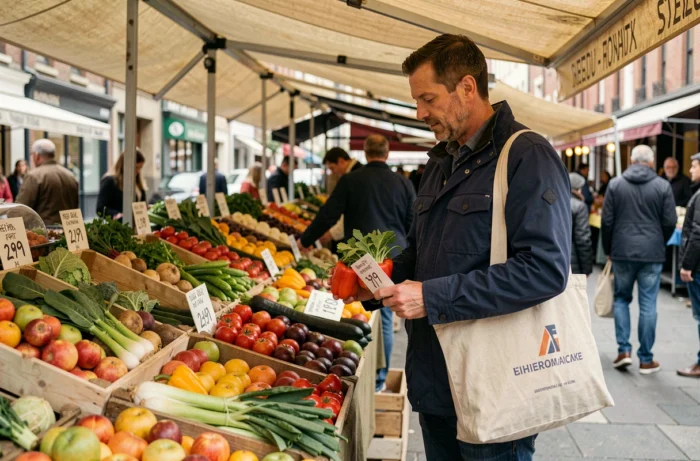
Food prices have risen by about 1% year-on-year, making it the least inflationary category at the moment. There are opportunities for maneuver, but they are more limited than one might think.
Planning meals for the week remains the most effective method to limit waste and impulsive purchases. A shopping list created from a defined menu reduces the number of trips to the store, and thus the temptations.
Buying in bulk or in large formats for non-perishable items (rice, pasta, legumes, cleaning products) decreases the price per kilo. Conversely, individual formats and prepared meals cost significantly more for the same quantity.
Anti-waste apps (Too Good To Go, Phenix) allow users to recover unsold items at reduced prices. This is not a daily solution, but a temporary supplement that lightens the bill without sacrificing variety.
Structural Expenses and Perception of Inflation
The Bank of France, in a survey commented on by La Finance pour Tous in July 2026, highlights a counterintuitive phenomenon: the French feel they are becoming poorer even though prices are hardly rising in certain categories. This gap between perception and reality leads to sometimes misguided saving behaviors.
Drastically reducing food expenses while letting insurance contracts or energy subscriptions slip is to act on the least inflationary category at the expense of those that weigh the most. Prioritizing categories based on their real impact on the budget, rather than ease of action, changes the game in the long term.
One last often-overlooked point: automatic savings, even modest, yield visible results in a few months. Setting up a transfer of a few dozen euros to a savings account on payday removes that amount from the current budget before it is even spent. The brain adapts to the remaining balance, without a sense of deprivation.